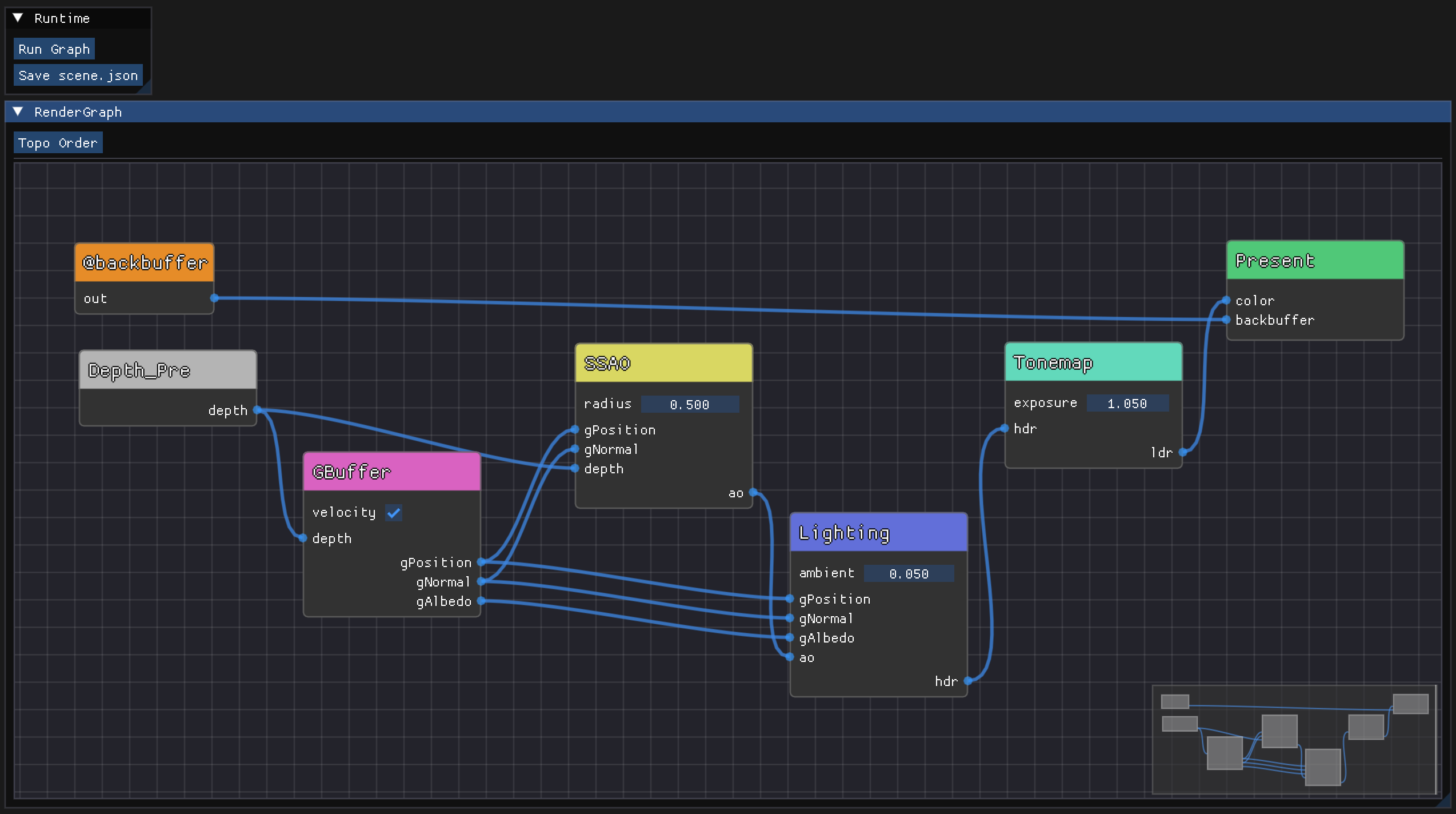
vrendergraph is a small data-driven layer that builds a runtime FrameGraph from JSON. Pass inputs and outputs describe slot connections; the host supplies the pass implementations and interprets engine-specific settings.
Runtime and editor data
- The runtime builder executes passes in the order of the JSON
passesarray. - The v0.3 schema adds resource descriptors, conditions, view modes and resource selectors while retaining support for v0.2 descriptions.
- Optional editor metadata stores node positions and other UI state, without affecting runtime execution.
The repository includes runtime integration and editor integration guides.
Place in the Vultra ecosystem
This standalone library belongs to the Vultra ecosystem. It was used in earlier data-driven pipeline experiments. Current libvultra dev-VRI documents its own RenderGraph interfaces and JSON construction separately; this page does not imply that vrendergraph is a dependency of that branch.
The image is the repository’s editor example screenshot.
