libvultra
A modern rendering engine for rapid prototyping, VR research, and — eventually — full games. The heart of the Vultra ecosystem.
Part of the Vultra Ecosystem.
Why This Exists
libvultra is my answer to the regrets left behind by Snow Leopard Engine: a more modern, more complete engine — built on explicit graphics APIs instead of OpenGL — that serves two masters at once: game development and my PhD research in high-performance VR rendering.
Design Decisions
FrameGraph / RenderGraph, not hand-wired passes. Without a frame-graph architecture, resource inputs, outputs, reads, and writes become ambiguous; you end up writing a zoo of tightly coupled OOP “Pass” classes, and nobody can see the shape of a frame at a glance. With a render graph, the entire rendering flow is declared explicitly and readable in one place. On the dev-next branch this goes further: pipelines are data-driven, described in declarative .vrg.json render-graph files with a live-preview editor.
VR-first, via OpenXR. Most engines still treat VR as a bolt-on, if they support it at all. My research is high-performance VR rendering, so OpenXR stereo rendering is a first-class citizen — scene-driven XR cameras, stereo render-graph templates, and editor/runtime mirror views — and the engine doubles as the vehicle for research on stereo novel-view synthesis.
No editor required. libvultra is deliberately usable the way raylib is: include the library, write code, get pixels. No engine project to create, no editor to learn. For research prototyping, this is the difference between an afternoon and a week.
Highlights (dev-next)
The master branch is the stable Vulkan core; the dev-next branch — where the project is evolving under the name VultraEngine — is far ahead:
- Multi-backend RHI (Vulkan, WebGPU), OpenXR VR/XR runtime with stereo rendering
- Data-driven RenderGraph (
.vrg.json) with a live-preview editor - Material Graph node editor compiling to shader sources
- 3D Gaussian Splatting, including OpenXR scenes,
.spzcompression, GPU radix-sort splat ordering, and foveated compositing - Runtime-loadable C++ and Lua plugins with editor-extension APIs
- AI-agent support: MCP integration, an editor agent layer, per-project AI workspaces, headless simulation
- Slang shader toolchain via vshadersystem, asset pipeline via vasset, EnTT ECS, Lua hot reload, Jolt Physics, ozz-animation, spatial audio, frame debugger and GPU/CPU profilers
- CI for Windows, Linux, macOS, Android, and WebAssembly
Showcase
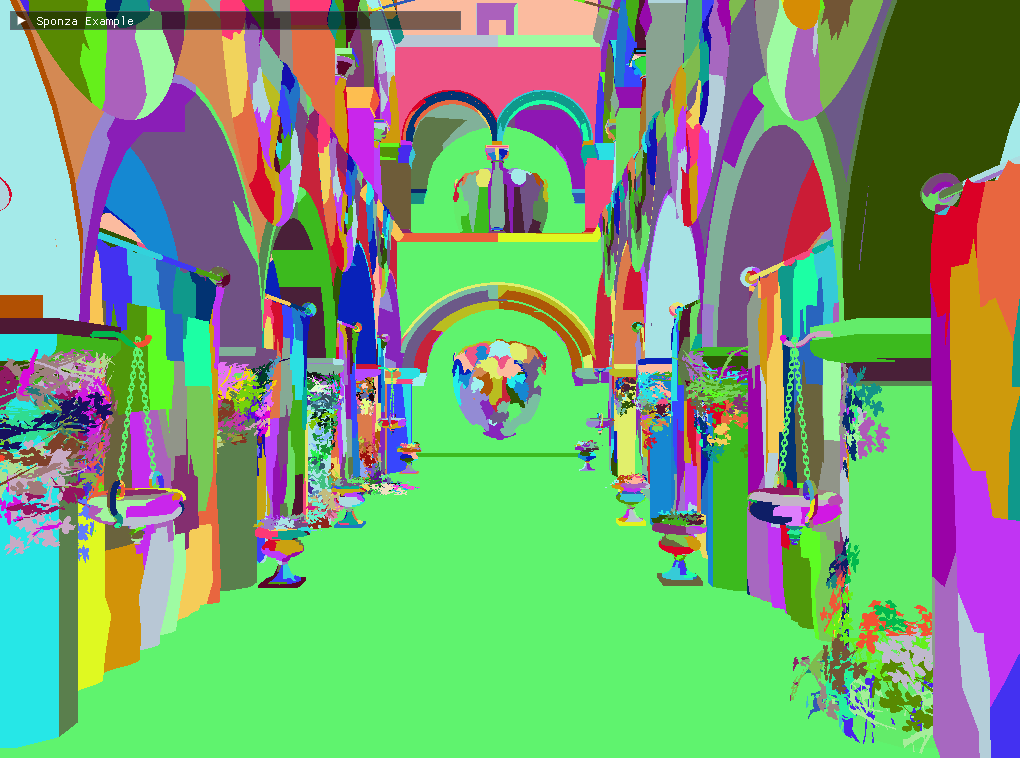
Example: Sponza with Meshlet Debug View
Looking Ahead
The rendering core will migrate onto VRI via VRI-Framework, replacing the current in-tree Vulkan/WebGPU backends with the full cross-API stack. Above libvultra, a private VultraEngine repository is building the game-engine layer with CoreCLR (C#) scripting — Lua serves today, but C# opens the whole .NET ecosystem for gameplay code and middleware. To try libvultra yourself, start from the starter template.