A C++23 CHIP-8 interpreter with SDL2 graphics, input and sound — the beginning of my emulator development journey.
Earlier emulator project
- Goal
- Learn how an interpreter turns machine instructions into graphics, input and sound.
- What I did
- I implemented a CHIP-8 interpreter in C++ with SDL2 handling the display, input and audio.
- Result
- The repository includes a ROM-loading application, an IBM logo demonstration and CMake build instructions.
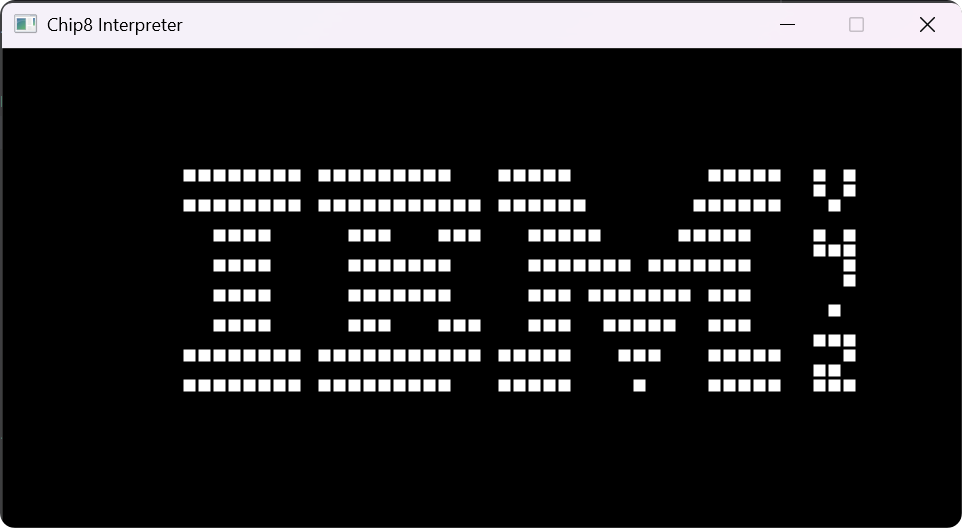
chip8-cpp is my first step into writing an emulator. It implements the CHIP-8 instruction set and uses SDL2 for the display, input handling and sound.
Running a ROM#
The application accepts a CHIP-8 ROM path. The repository documents a CMake build with a C++23 compiler:
cmake -S . -B build
cmake --build build
Run the resulting chip8cpp-app executable with the path to a ROM. Its location depends on the build generator and configuration.
Scope and source#
This is a small learning project focused on CHIP-8. It is separate from my handheld adaptations of existing emulators, such as WQX on GameShell and Mini vMac on PocketCHIP.
The screenshot is the repository’s IBM logo showcase. Source code and build instructions are available in the MIT-licensed repository.
Comments